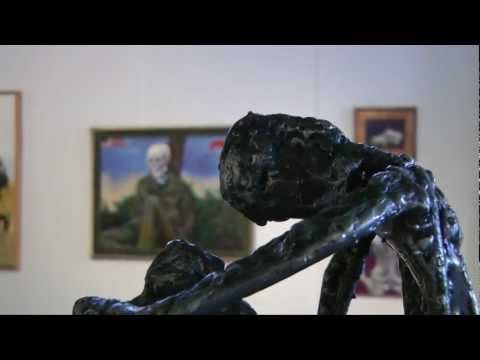
Charles Shobe
Born: Moorfield, West Virginia, 1940
Died: January 16, 2011
Served in Vietnam, U.S. Marine Corps
1st Battalion, 4th Marine Regiment, 3d Marine Division
DMZ, Dong Ha
C-2 Firebase, Con Thien, Camp Evans, and the Khe Sanh area
Reaction-Force Platoon Commander, 1967-68
From the Artist:
December 1967
Flying over the DMZ with the company payroll in a metal ammo box, I sit on the floor of a windy, rattling old helicopter, watching the hundreds of bomb craters pass below; filled with water, surreal, like the surface of some imaginary green planet. Cold fog blows through the craft and it's just me, the door gunner, and the guy on the floor under the poncho. The poncho is tucked around the body, but the wind keeps blowing it off the head and shoulders and it snaps and flaps and beats violently on the face. The body has sandy hair and dark dried blood on the neck and behind the ear. I try not to look. The door gunner and I both stare. The gunner shifts in his seat, adjusts the machine gun, and pulls the poncho up over the face. He props his muddy boot on the poncho, holds it there with his heel against the head, and again looks out over the M-60 barrel, down at the foggy green below. A Christmas present for Mr. and Mrs. John Doe from the U.S. Government.
My paintings are of the horror show that was Vietnam: butchery carried out for politicians, bureaucrats, and ambitious generals whose egos would not let them say "enough;" art for an indifferent public; art to honor those who lived and died there, and earned only a few hundred dollars a month.
It would take a lifetime to paint it all.
The Class of '67
In June 1968, we were on an operation in the hills between Khe Sanh and Laos. One night NVA sappers crawled up through the wet elephant grass and overran our position. In the ensuing firefight we took heavy casualties. The sky was lit up with parachute flares and on the ground the night swayed out through the trees and became a kind of surreal blue day. The armorer working with me had his leg blown off at the knee by a grenade; the corpsman who came to help him was shot through the shoulder. When daylight came the NVA had pulled back and mortared us for the next few hours. Being a short timer, with a flight date at the end of the month, I had dug a deep foxhole and during that morning I shared it with eight or ten different people: my wounded company commander, a wounded air liaison officer, a wounded jeep driver, a wounded artillery forward observer, a wounded mortar man, the communications officer, and some others.
When the bodies of the dead were laid out in the clearing and covered with ponchos, they all looked alike. They lay in short rows on their backs with their toes pointing up and outward. In death, they were all the same, except for the one who had only one foot—one boot. This scene occupied a little part of Class of '67. June was graduation month; some of them had probably been finishing high school the year before.


.jpg)


%20-%20Camp%20Evans.jpg)


.jpg)

%20-%20Con%20Thien.jpg)


.jpg)
.jpg)
.jpg)
.jpg)
.jpg)
.jpg)
.jpg)
.jpg)
.jpg)
.jpg)
.jpg)
.jpg)
.jpg)
.jpg)
.jpg)
.jpg)
.jpg)
.jpg)
.jpg)
.jpg)
.jpg)
.jpg)
.jpg)
.jpg)
.jpg)
.jpg)
.jpg)